The World's Fair in VR
View Live Site
ROLE
Archival and Content Research
User Testing Facilitation
Storyboarding
Project Management
CLIENT
Chicago History Museum /
The Chicago 00 Project
TOOLS
Google Suite
Oculus VR
The Chicago 00 Project is a partnership between the Chicago History Museum and filmmaker Geoffrey Alan Rhodes to produce and publish a series of site-specific, immersive multimedia experiences designed to showcase the museum's film, photo, and sound archive and share Chicago's stories in new ways.
For its fifth project, Chicago 00 secured a grant from the National Endowment for Humanities to create an immersive experience of the 1893 World's Columbian Exposition using the Chicago History Museum's photo archive and complete an evaluation of the user experience of Chicago 00's VR and AR stories to date to understand the cognitive and affective outcomes of these emerging experiences.
The Chicago 00 Project team needed to surface a critical mass of archival photographs of the 1893 World's Fair and gather other primary and secondary materials to inform an engaging, educational narrative for a 360° VR experience of the fair. Their evaluator, HG&Co, needed to recruit participants, facilitate user experience testing, and gather qualitative and quantitative data about the user experience of Chicago 00's VR and AR stories.
Aside from the logistical challenges, arguably the more difficult one was the narrative challenge. How might we tell an immersive story of an event that took 4 years to plan and build, saw more than 21 million attendees, and stretched across 690 acres—not to mention one that has become an historical touchpoint for themes spanning American nationalism, beaux arts architecture, social darwinism and white supremacy, the industrial revolution, and more? And in only 10 minutes.
Archival and Secondary Research
Found and collated hundreds of photographs of the fair from archival collections
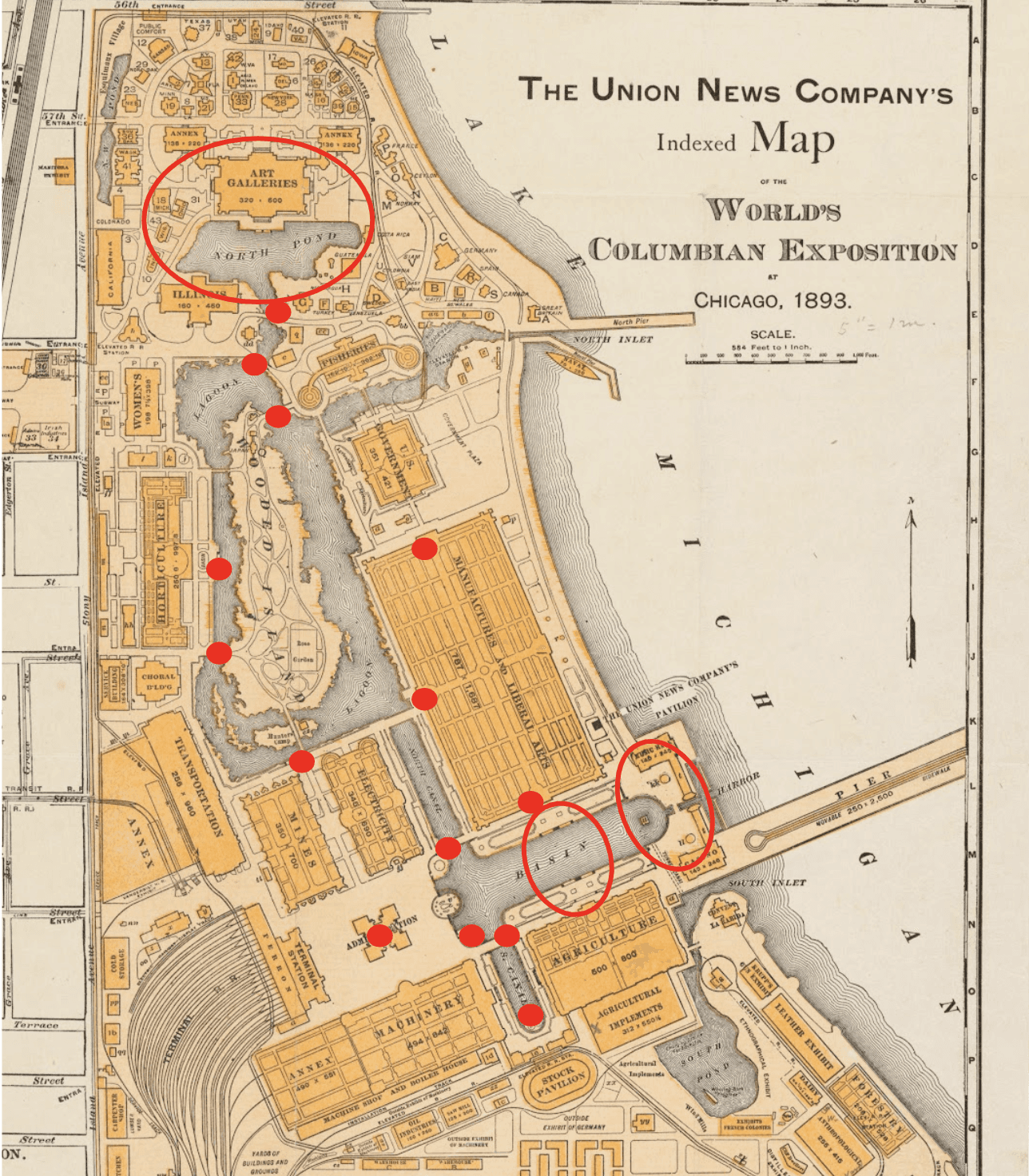
Used historical maps of the 1893 World's Fair and photograph metadata to geolocate the photographs and their extant locations in order to identify critical masses of images that could be stitched together
Researched primary resources (diaries, contemporary newspaper articles, audio recordings) about experiences of planning, working and performing at, and going to the fair
Researched the latest scholarship about the fair to understand how scholars have been thinking about the Exposition within a larger historical context
Prototyping, Storyboarding, and Content Development
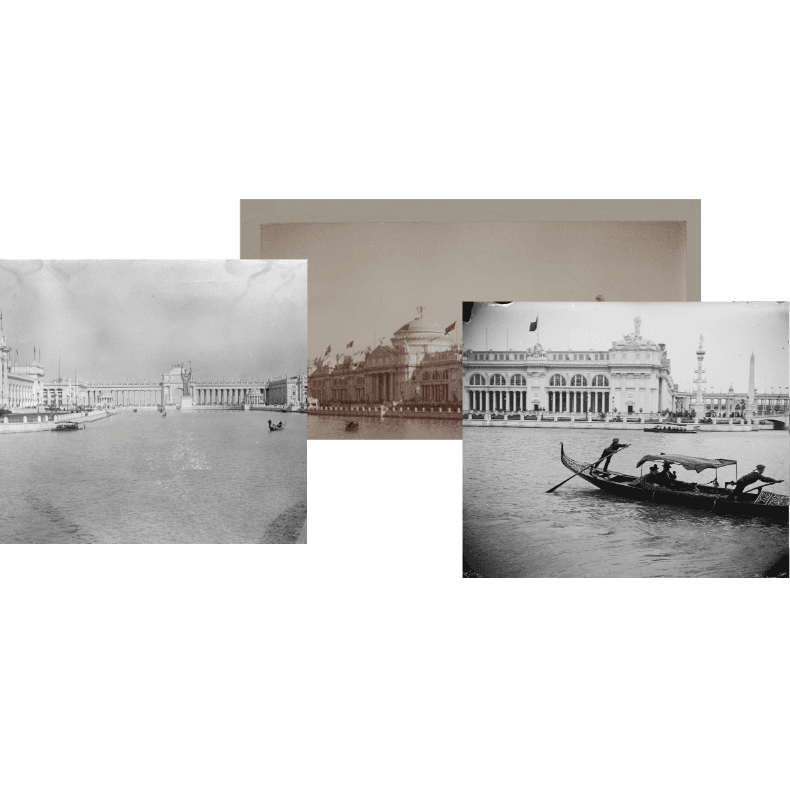
Created prototypes of panoramic views using historical photographs
Worked with the project team to choose which panoramas to include in the virtual 360º tour based on the quality of the photographs and how each panorama could bring out salient information about the World's Fair through the audio narrative
Developed a storyboard using the chosen panoramas
The intended focus for the VR experience had originally been on the Midway Plaisance and the Ferris Wheel alone. However, based on research and storyboarding, the team decided to include some of the White City to tell a more complete story of the World's Fair—most visitors, after all, experienced both as parts of a whole and compared one to the other.
User Testing
Recruited high school students, college students, and museum visitors for user testing sessions of previous Chicago 00 VR and AR experiences
Facilitated user testing, engaging with participants and gathering quantitative and qualitative feedback
Once the 1893 World's Fair prototype was ready, planned user testing with museum visitors and third-party evaluator
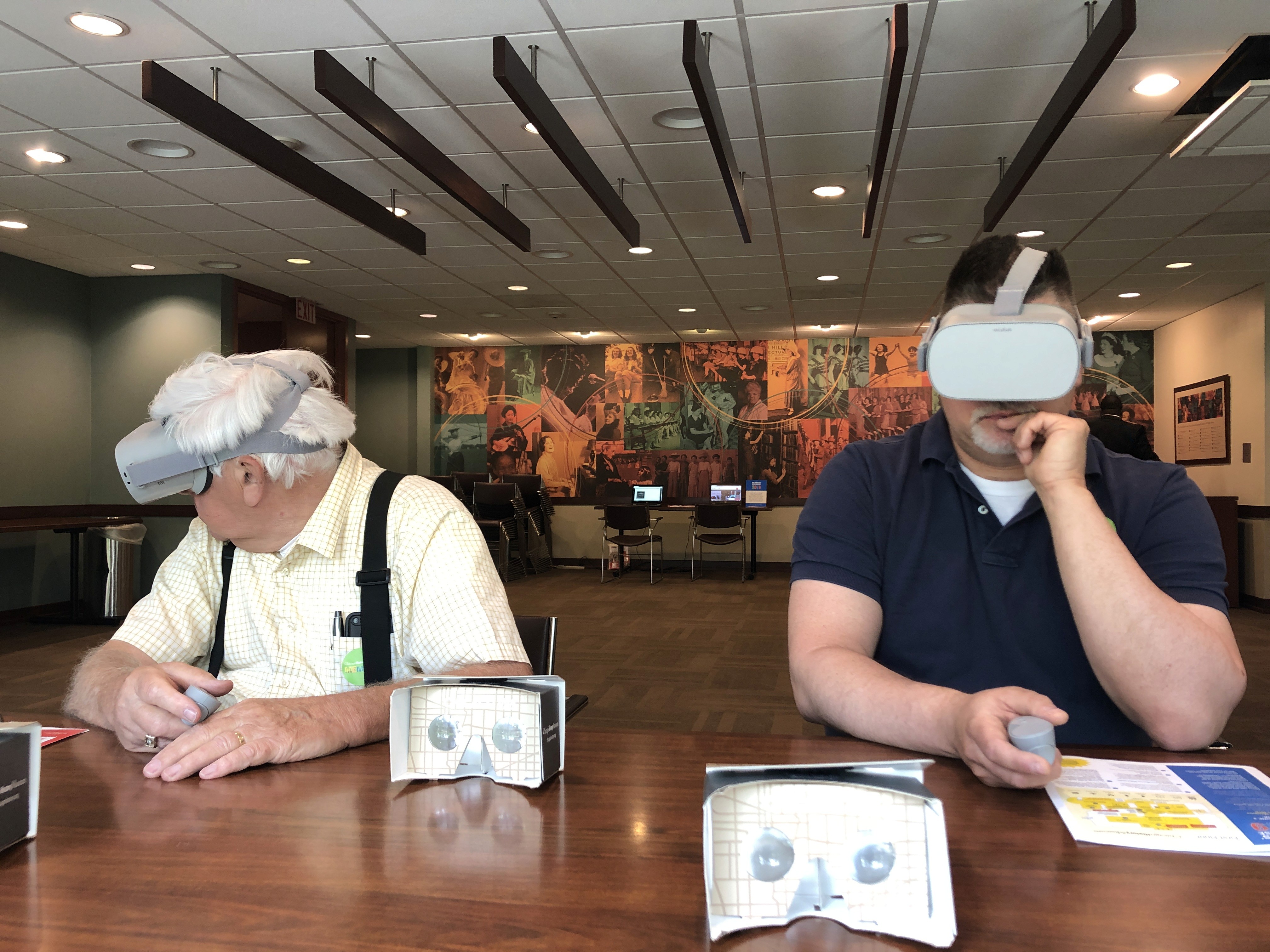
Managed user testing sessions using Oculus VR headsets and synchronized playback followed by feedback surveys
Production and Marketing
Advised the creative director on extant locations, orientations, and schematics of panoramas and 3D model of the Ferris wheel based on research
Coordinated permits and planned the 360º photographing/filming of extant site in Jackson Park
Created marketing and communication plan for the release of the web portal and VR experience
Conceptualized and produced a promotional video depicting the process of how photographic research goes into making the virtual tour
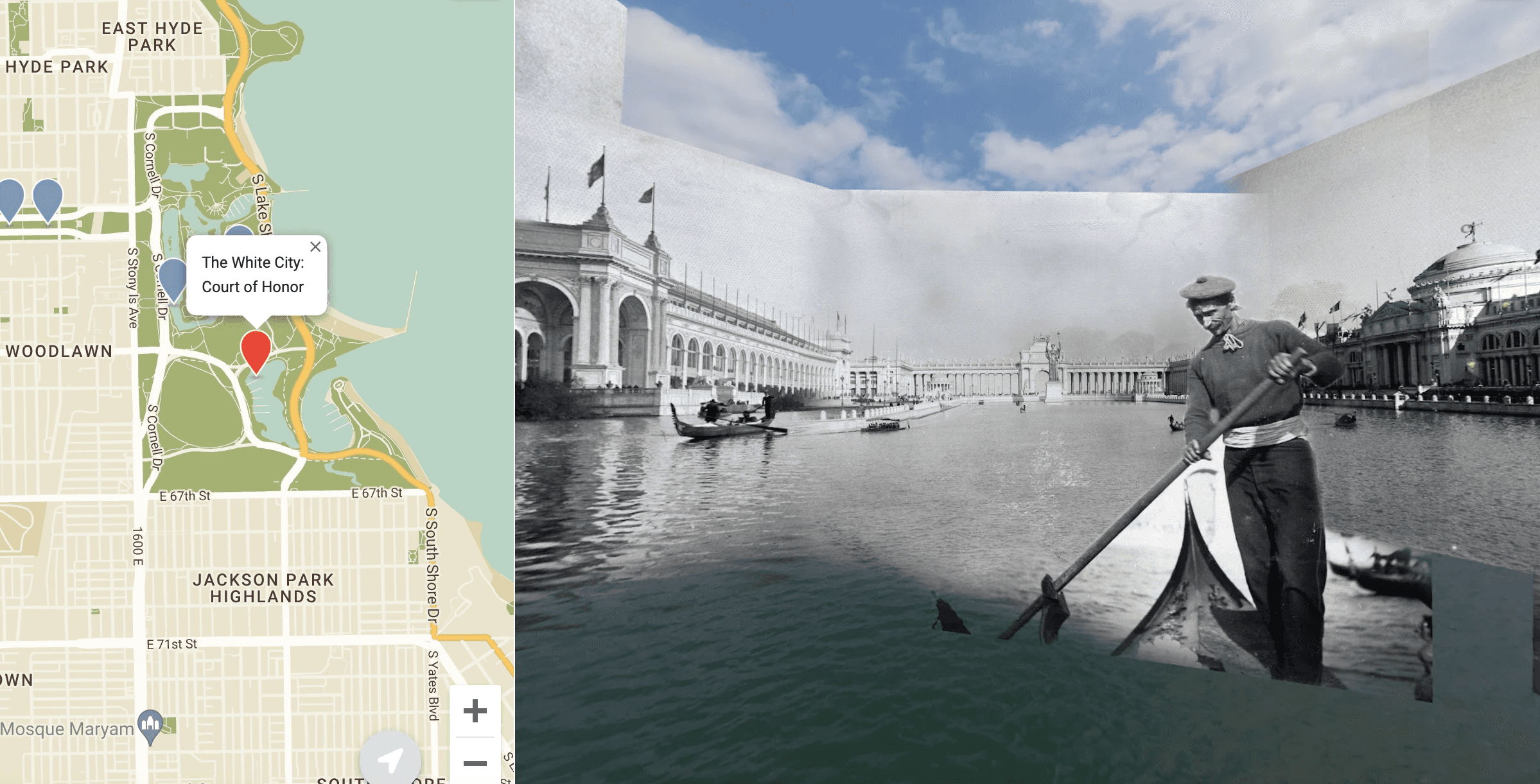
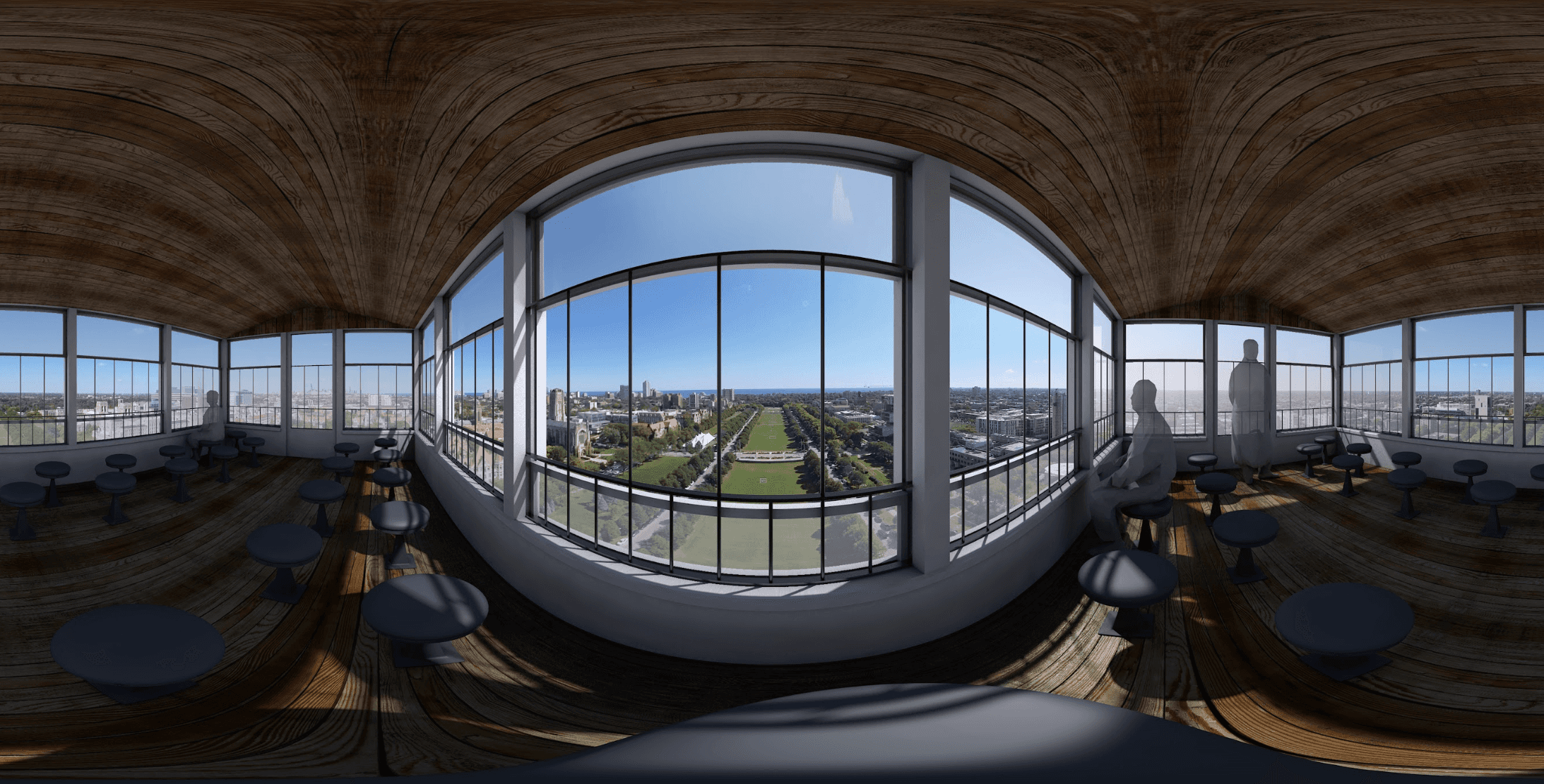
The 1893 World's Columbian Exposition VR tour takes users to 13 locations in present-day Jackson Park and Midway Plaisance on the south side of Chicago. A 360º panorama of what the area looks like today is gradually overlaid with photographs of the 1893 World's Fair, giving users an immersive experience of now-and-then. Starting at the White City and meandering to the Midway, culminating in a virtual ride of the first ever Ferris Wheel.
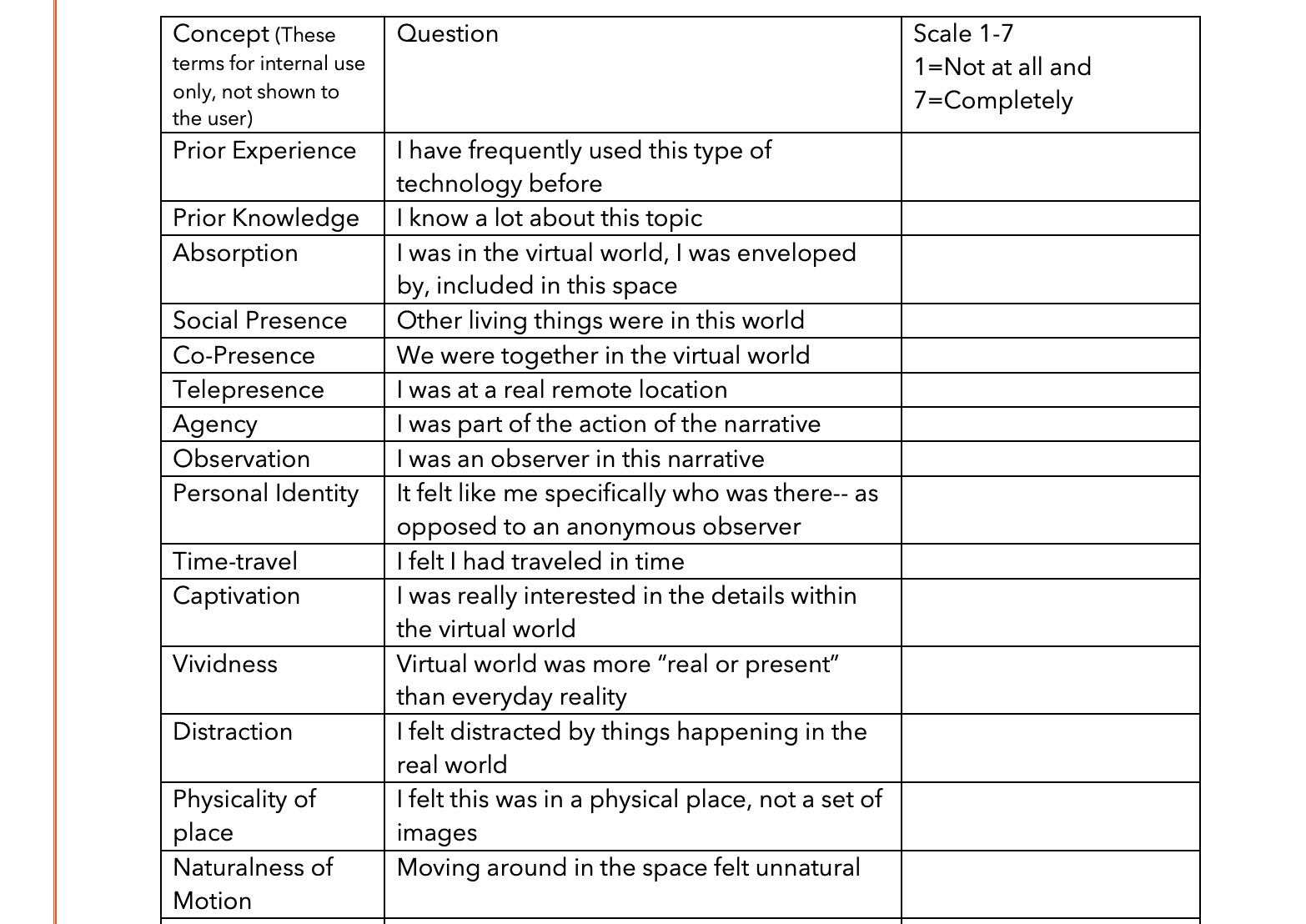
From the user testing of dozens of participants with the VR and AR experiences created through the Chicago 00 Project, HG&Co created a novel Experience Evaluation Rubric (EER) to examine, in depth, how individuals experience immersion and presence with AR and VR environments. The EER allows a team to disaggregate the various aspects of immersion to focus on the specific salient elements and how those elements influence experience outcomes. The rubric was published, alongside the VR portal, for other institutions to use to examine their own VR/AR experiences.
View Live Site
Impact + Results
The World's Fair VR experience was a featured element of several in-person museum events, which garnered intense interest among visitors—at one such event, 75 individuals signed up for the experience ahead of time or at the door. HG&Co, the museum evaluators on the project, found that the majority of participants could recall facts about the World's Fair and said they enjoyed the experience. Furthermore, more than 80% were very interested in seeing the Museum's gallery displays of the World's Fair after the VR experience. This was a critical finding for the museum—that the virtual was an arbiter for engagement with the physical exhibits.
The accompanying web portal was launched in mid-2020. The museum was able to promote this virtual experience of the World's Fair as a way to engage with the museum at a time when the Covid-19 lockdown was pushing museums to find virtual ways to engage with their audience.
Read the full impact report
What I Learned
Working on a digital project in a museum context was enlightening—in an otherwise bureaucratic institution, this project aimed to be experimental and collaborative while still being beholden to a grant funder. I learned how to document new and established processes, and gained an understanding of the difference between museum evaluation and other kinds of user testing and research methods.
© 2025 Kayla’s Portfolio. All Rights Reserved.