ROLE
Organizer
Facilitator
Curriculum Designer
TOOLS
Notion
Google Drive
Paper, pencil, sticky notes
Overview
After several years of working as a design researcher and strategist helping museums, arts, and informal education organizations imagine exhibits and launch new websites, I sought to make a shift. I realized that while I love the arts, I was ready to apply my skills and attention to other missions that align with my values—like working toward more just, equitable systems for all. I also knew that if I weren’t careful I could end up perpetuating the systems of power that are at the root of systemic inequity, no matter how well intentioned I might be. I needed to learn how to walk the walk, not just talk the talk.
So I applied and got accepted into several master’s programs, including SVA's MFA in Design for Social Innovation and Parsons's MFA in Transdisciplinary Design. Ultimately, I couldn’t afford these programs, so I decided to do an independent study to learn the mindsets, postures, frameworks, and practices of designing social change.
Throughout 2024 I collected a curriculum of learning resources, including more than 100 books, articles, videos, podcasts, webinars, and courses. I knew going into this self-study that I didn't want to do it alone—I needed a cohort of people to learn with and from, to discuss and metabolize what I was learning, and to give me feedback to check my understanding.
So, from January–April 2025 I organized, hosted, and facilitated a 16-week Reading Circle on social design. This small cohort of 6 people engaged with nearly 50 resources and met biweekly for 2.5 hours to discuss and practice what we were learning. This all culminated in a dinner party and a comparative summary of the methods and principles that we learned about.
Overview
After several years of working as a design researcher and strategist helping museums, arts, and informal education organizations imagine exhibits and launch new websites, I sought to make a shift. I realized that while I love the arts, I was ready to apply my skills and attention to other missions that align with my values—like working toward more just, equitable systems for all. I also knew that if I weren’t careful I could end up perpetuating the systems of power that are at the root of systemic inequity, no matter how well intentioned I might be. I needed to learn how to walk the walk, not just talk the talk.
So I applied and got accepted into several master’s programs, including SVA's MFA in Design for Social Innovation and Parsons's MFA in Transdisciplinary Design. Ultimately, I couldn’t afford these programs, so I decided to do an independent study to learn the mindsets, postures, frameworks, and practices of designing social change.
Throughout 2024 I collected a curriculum of learning resources, including more than 100 books, articles, videos, podcasts, webinars, and courses. I knew going into this self-study that I didn't want to do it alone—I needed a cohort of people to learn with and from, to discuss and metabolize what I was learning, and to give me feedback to check my understanding.
So, from January–April 2025 I organized, hosted, and facilitated a 16-week Reading Circle on social design. This small cohort of 6 people engaged with nearly 50 resources and met biweekly for 2.5 hours to discuss and practice what we were learning. This all culminated in a dinner party and a comparative summary of the methods and principles that we learned about.
What I did
What I did
Created a syllabus
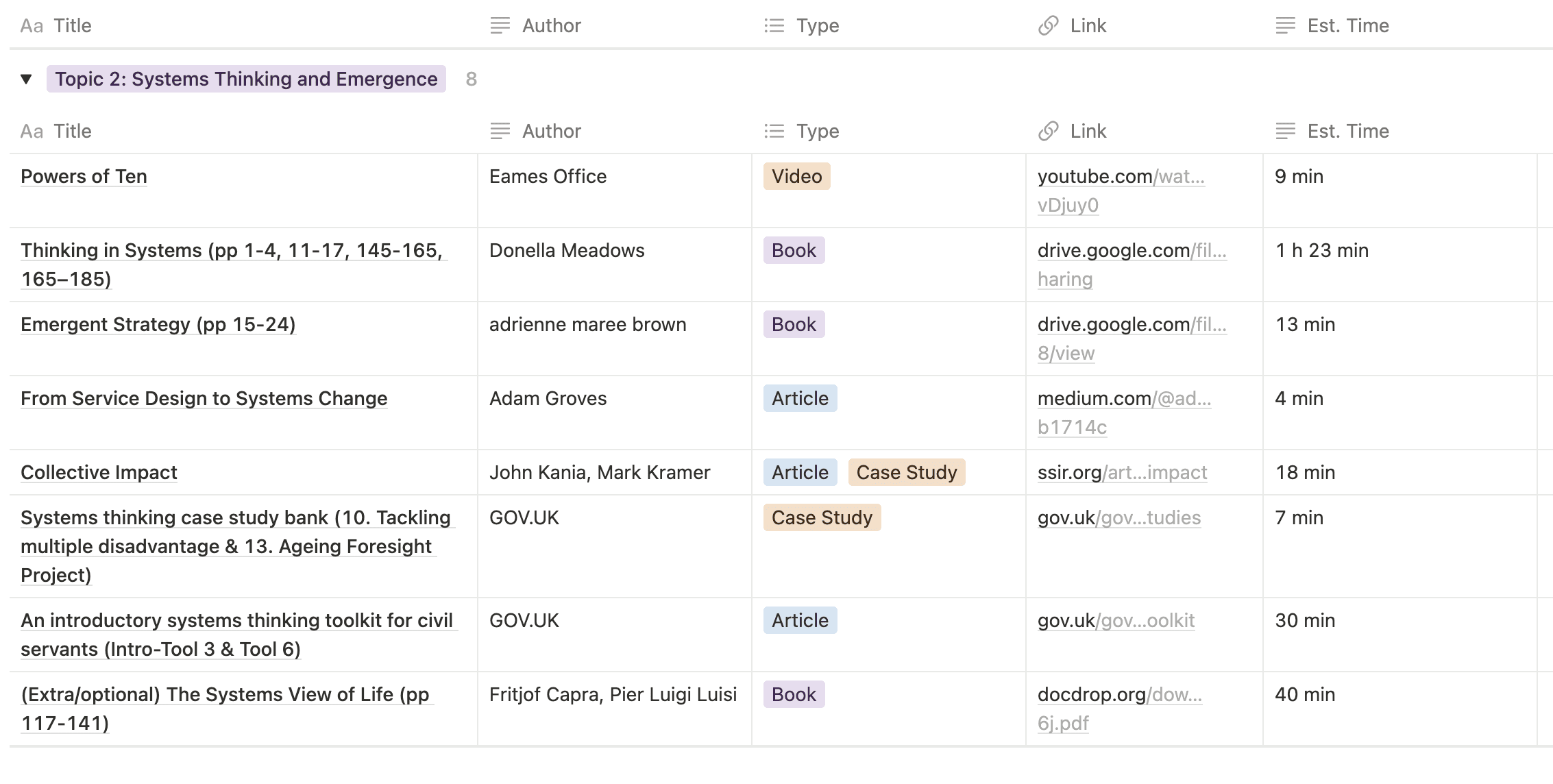
I organized resources into 7 coherent social design topics and wrote up a syllabus. These topics included human-centered design, systems thinking and emergence, life-centered design and biomimicry, decolonizing design and co-design, trauma-informed design, Afrofuturism and speculative design, and civic design.
What I did
Created a syllabus
I organized resources into 7 coherent social design topics and wrote up a syllabus. These topics included human-centered design, systems thinking and emergence, life-centered design and biomimicry, decolonizing design and co-design, trauma-informed design, Afrofuturism and speculative design, and civic design.
Recruited participants and initiated a second group
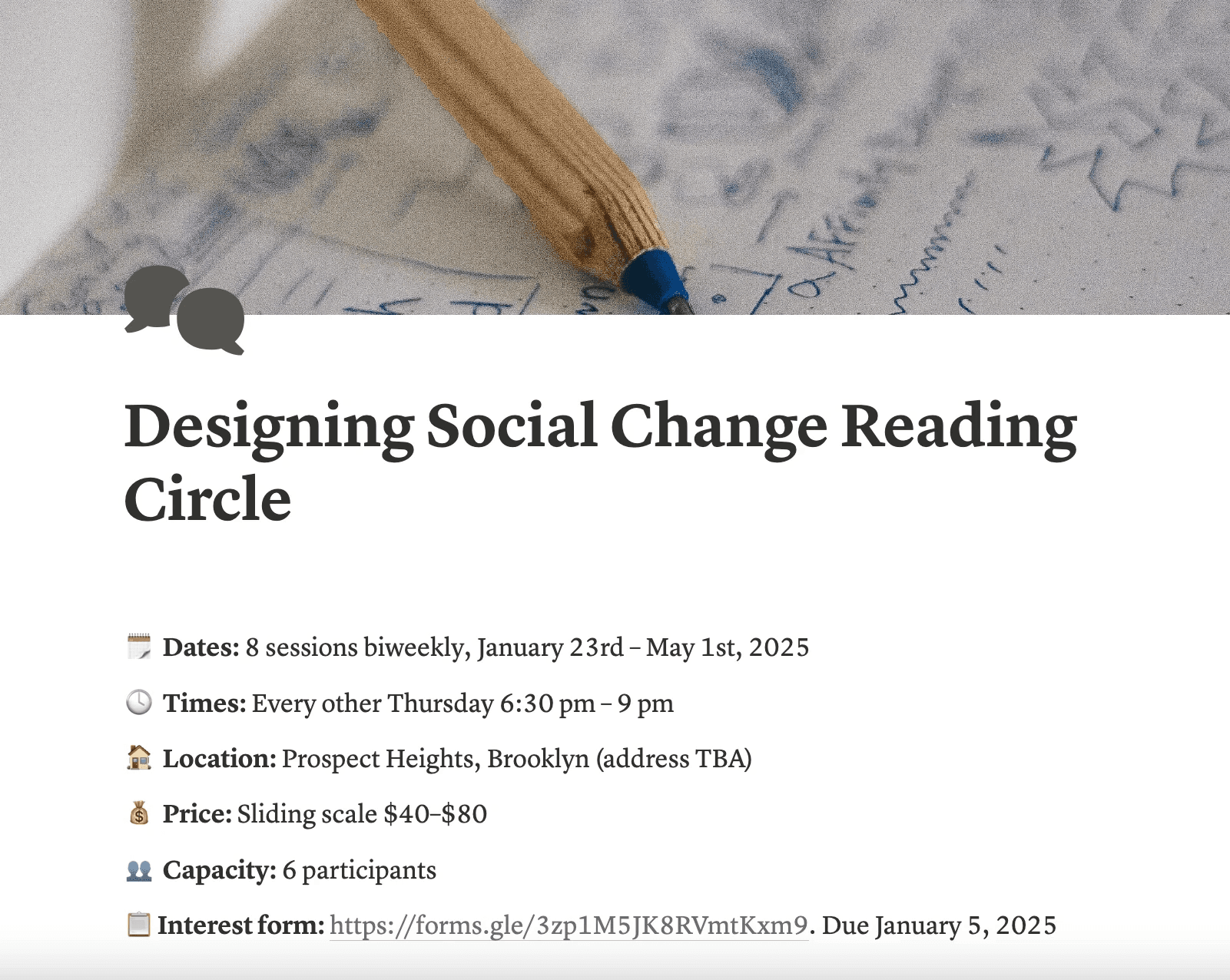
Although I had only space to host a handful of people in person, 20 people expressed their interest including several folks living in other cities. I recruited 6 people to participate in the Reading Circle, including two service designers, a civic designer, a behavioral designer, a design researcher, and a technologist.
Because there was surplus interest, I helped others initiate a sister Reading Circle that would be facilitated by someone else but still use the syllabus I had created.
Recruited participants and initiated a second group
Although I had only space to host a handful of people in person, 20 people expressed their interest including several folks living in other cities. I recruited 6 people to participate in the Reading Circle, including two service designers, a civic designer, a behavioral designer, a design researcher, and a technologist.
Because there was surplus interest, I helped others initiate a sister Reading Circle that would be facilitated by someone else but still use the syllabus I had created.
Designed biweekly gatherings
I hosted the biweekly meetings in my living room to create a sense of hospitality and connection.
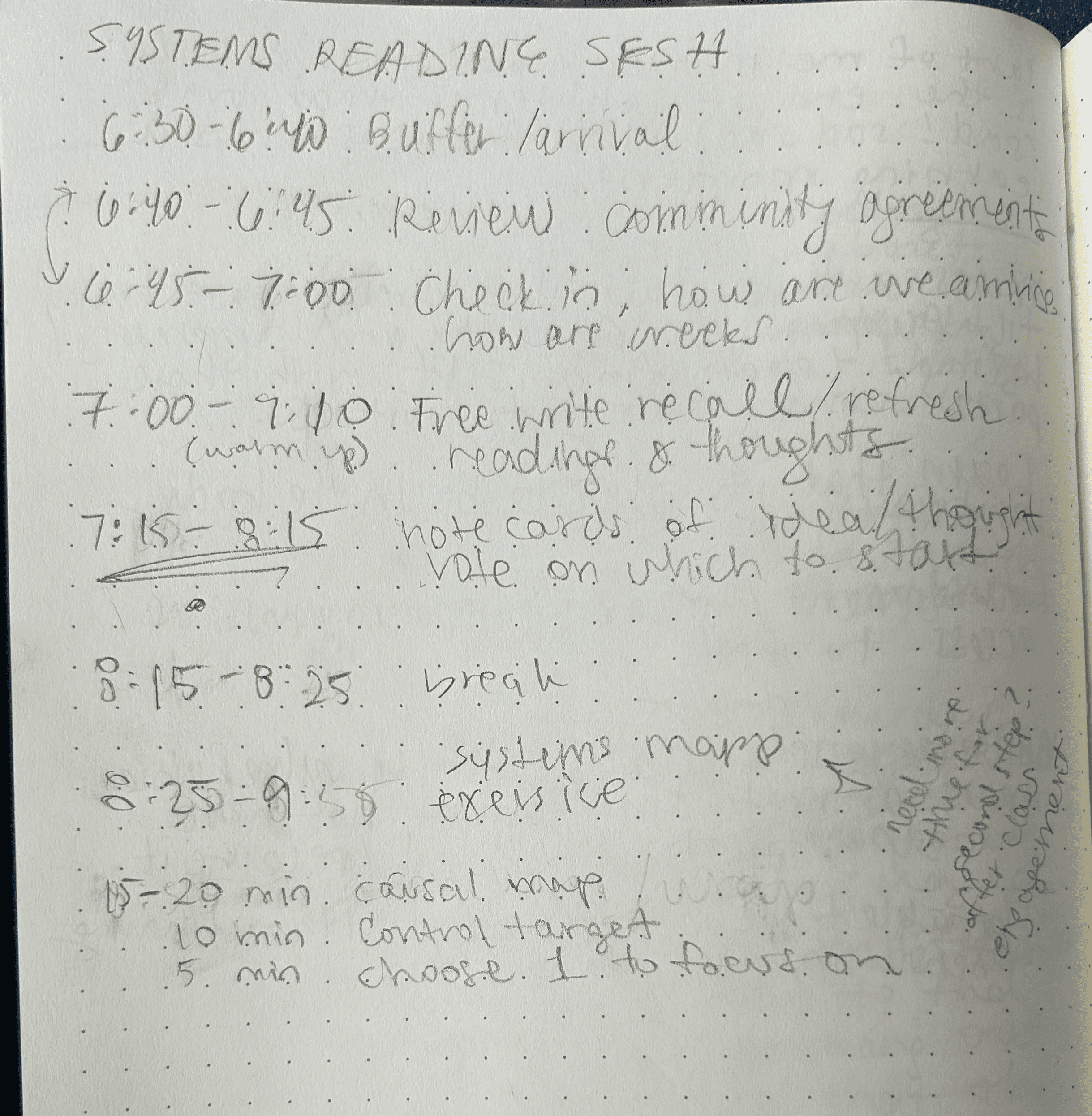
Each gathering was thoughtfully crafted with prompts for discussion, written reflection, and practice exercises to activate the concepts we learned about.
It was important to me to let emergence happen during the meetings, so I left some space for the organic evolution of conversation and happenings in the world.
Designed biweekly gatherings
I hosted the biweekly meetings in my living room to create a sense of hospitality and connection.
Each gathering was thoughtfully crafted with prompts for discussion, written reflection, and practice exercises to activate the concepts we learned about.
It was important to me to let emergence happen during the meetings, so I left some space for the organic evolution of conversation and happenings in the world.
Facilitated discussion, reflection, and practice activities
During our first gathering, I facilitated the group in creating community agreements that helped guide the group in how we wanted to treat each other.
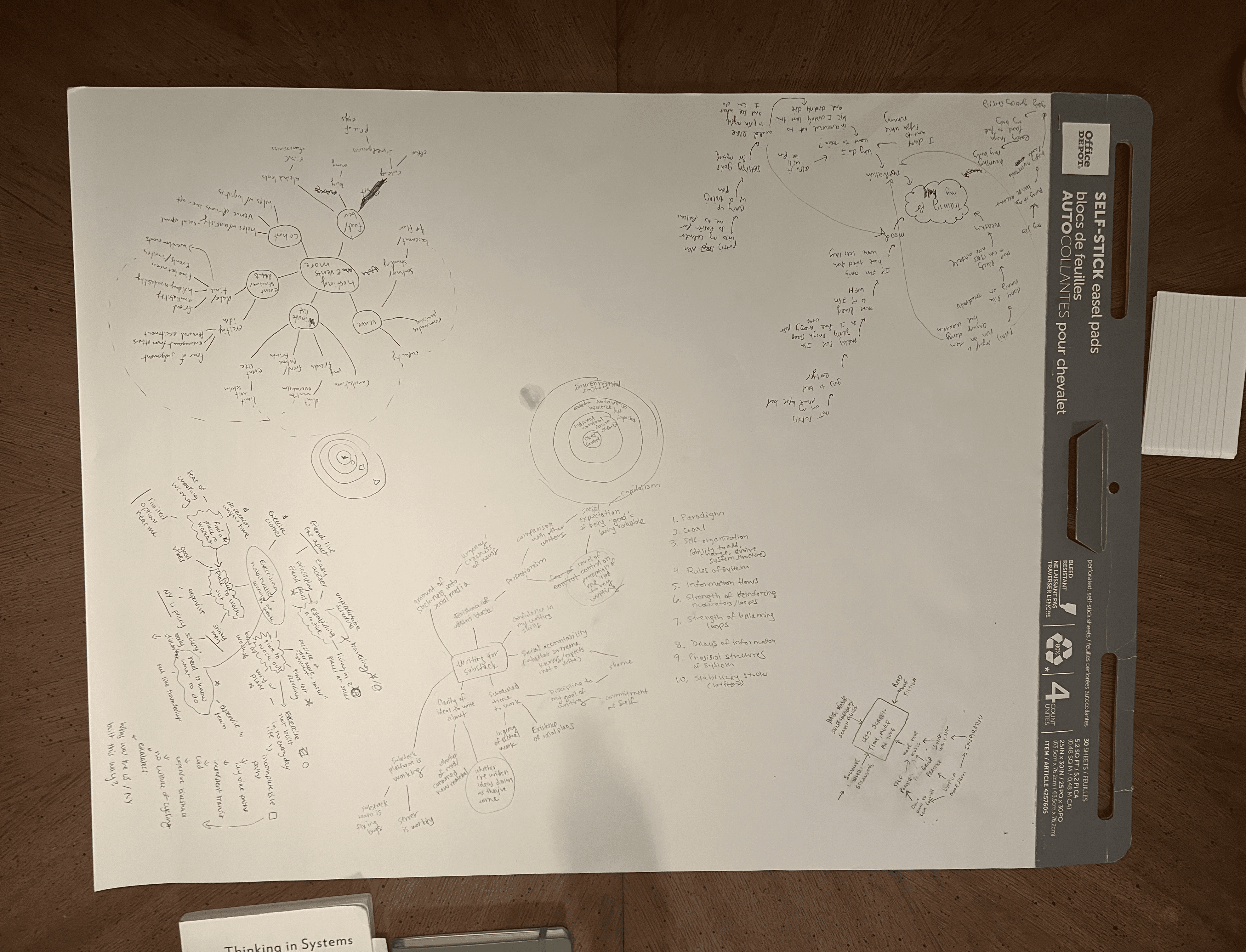
Each week, I guided the group in different methods of reflection and discussion. For example, we used notecards to democratically move through the group's questions of interest. In other sessions I prompted written reflection and offered thought exercises that challenged us to imagine previous case studies using different frameworks.
I also planned and facilitated the group in practice exercises, including making causal loop systems maps and doing a speculative "social dreaming" activity.
Facilitated discussion, reflection, and practice activities
During our first gathering, I facilitated the group in creating community agreements that helped guide the group in how we wanted to treat each other.
Each week, I guided the group in different methods of reflection and discussion. For example, we used notecards to democratically move through the group's questions of interest. In other sessions I prompted written reflection and offered thought exercises that challenged us to imagine previous case studies using different frameworks.
I also planned and facilitated the group in practice exercises, including making causal loop systems maps and doing a speculative "social dreaming" activity.
Coordinated "field trips" to talks, exhibitions, and events
Some of the emergent facilitation showed up in impromptu plans to attend events outside of our normal meetings.
For our gathering on the topic of civic design, we attended a panel discussion at the NYU Wagner Graduate School of Public Service hosted by Iris Weinshall.
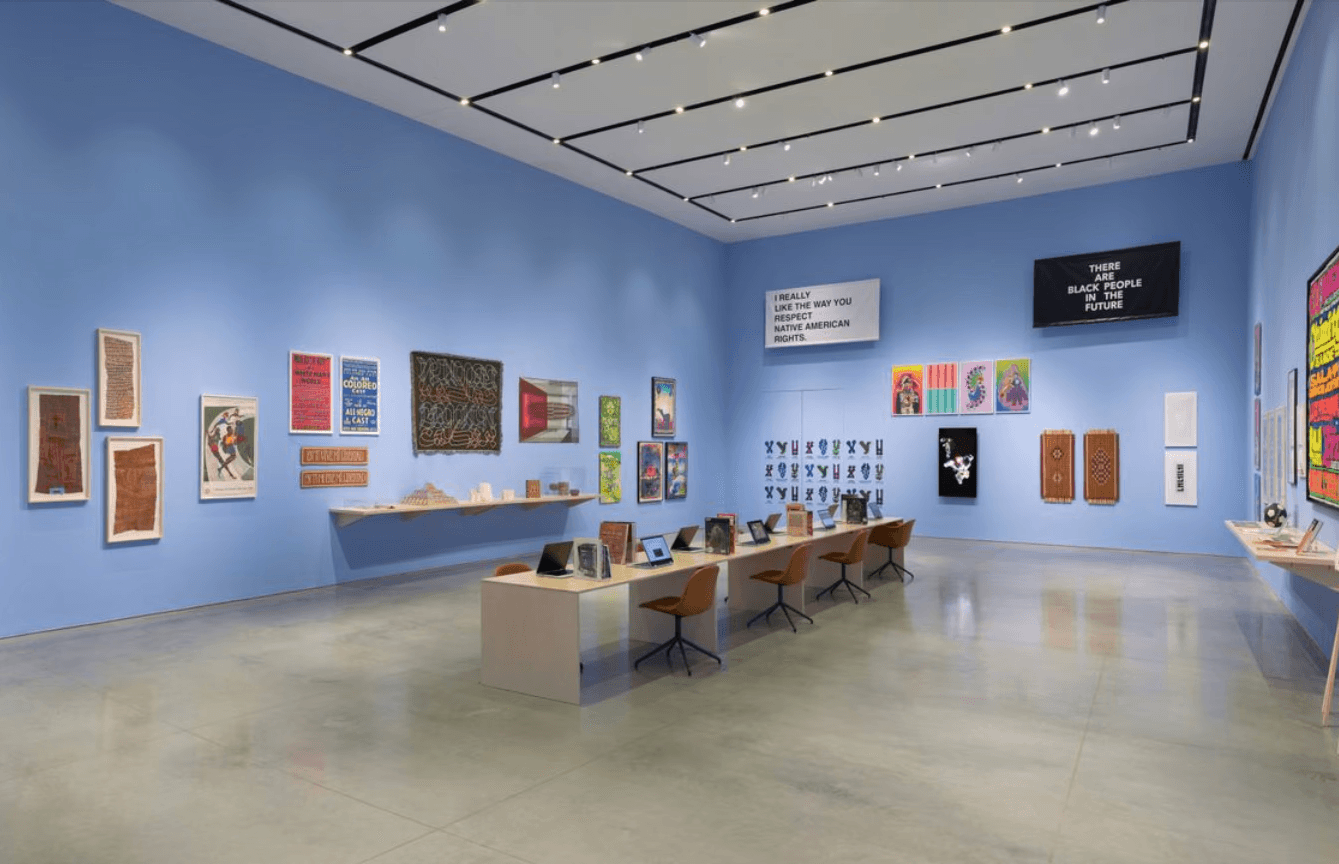
We also went on a field trip together to the Reverberations: Lineages in Design History exhibit and an event hosted by SVA's Design for Social Innovation and Afterthought on Design, Memory, and Myth.
Coordinated "field trips" to talks, exhibitions, and events
Some of the emergent facilitation showed up in impromptu plans to attend events outside of our normal meetings.
For our gathering on the topic of civic design, we attended a panel discussion at the NYU Wagner Graduate School of Public Service hosted by Iris Weinshall.
We also went on a field trip together to the Reverberations: Lineages in Design History exhibit and an event hosted by SVA's Design for Social Innovation and Afterthought on Design, Memory, and Myth.
Co-designed a concluding dinner party
For our final gathering, I invited the group to co-plan a dinner party to celebrate the connections we made and the things that we learned over the course of 16 weeks.
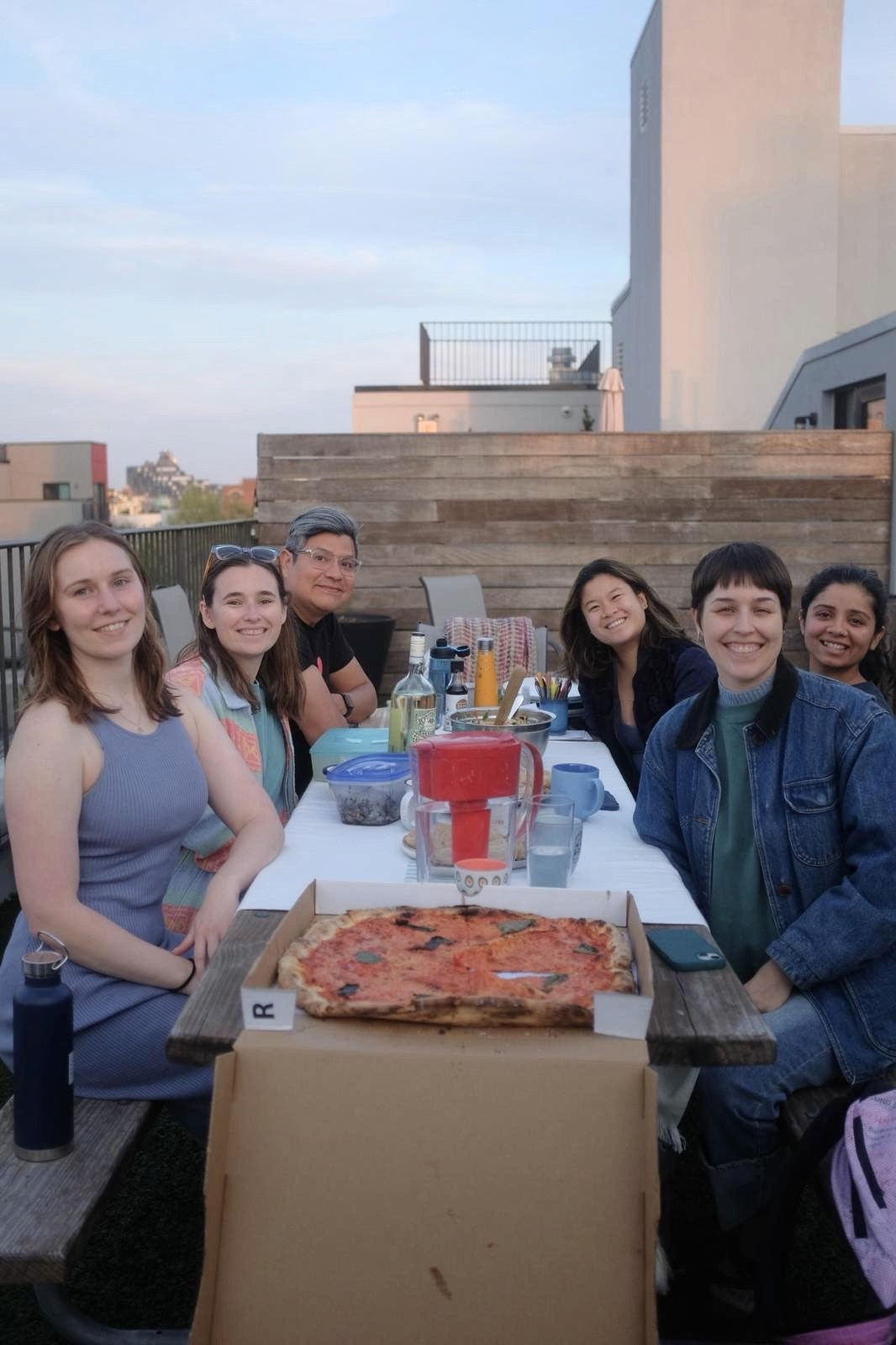
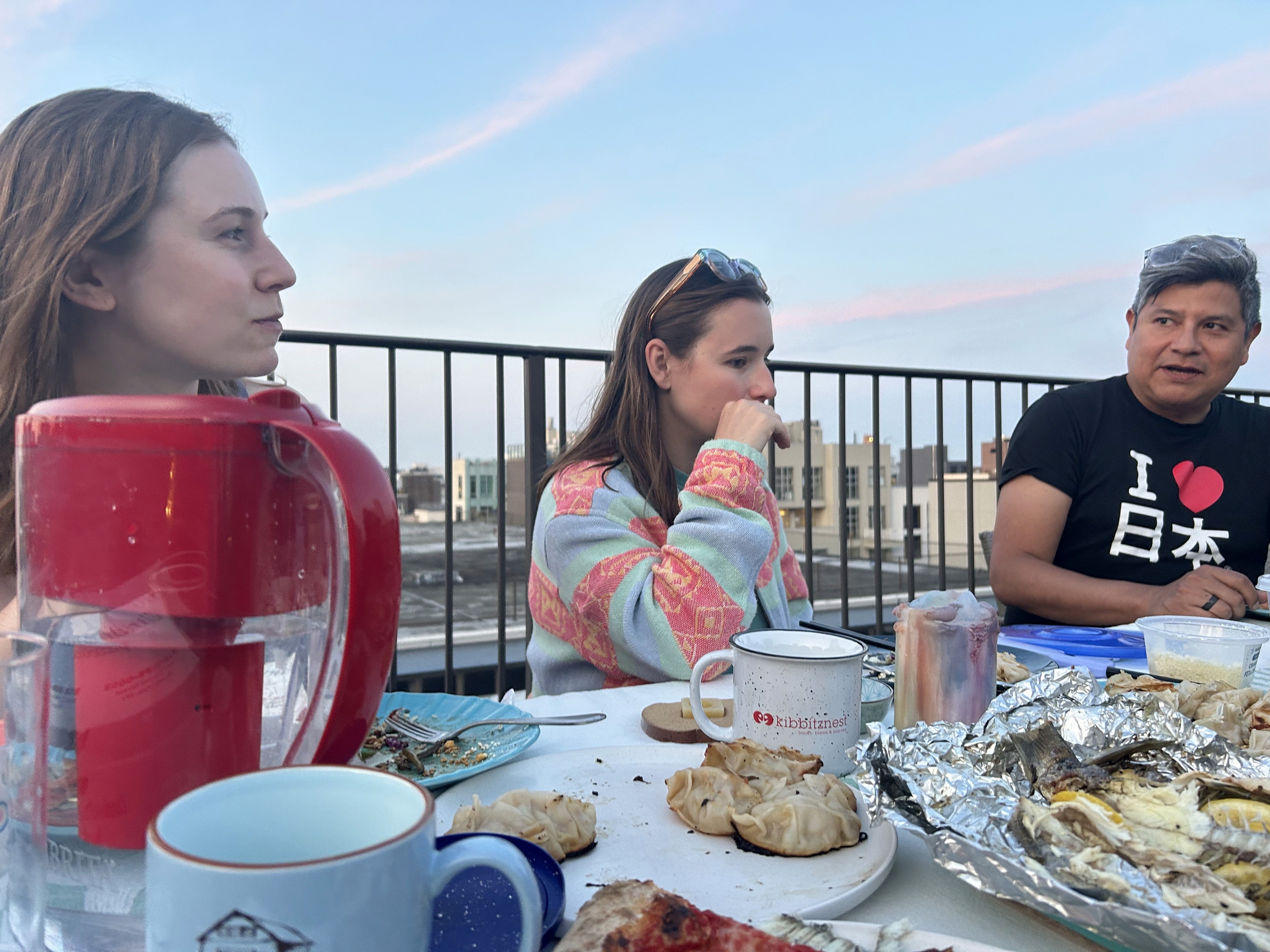
We hosted a potluck dinner—a potluck of ideas and a potluck of dishes. Each group member contributed a learning resource to discuss over dinner, and each person also brought a dish to share.
The six of us ate, drank, told stories, and reflected on what we learned together.
Co-designed a concluding dinner party
For our final gathering, I invited the group to co-plan a dinner party to celebrate the connections we made and the things that we learned over the course of 16 weeks.
We hosted a potluck dinner—a potluck of ideas and a potluck of dishes. Each group member contributed a learning resource to discuss over dinner, and each person also brought a dish to share.
The six of us ate, drank, told stories, and reflected on what we learned together.
Created a comparative summary of the 7 topics' methods and principles
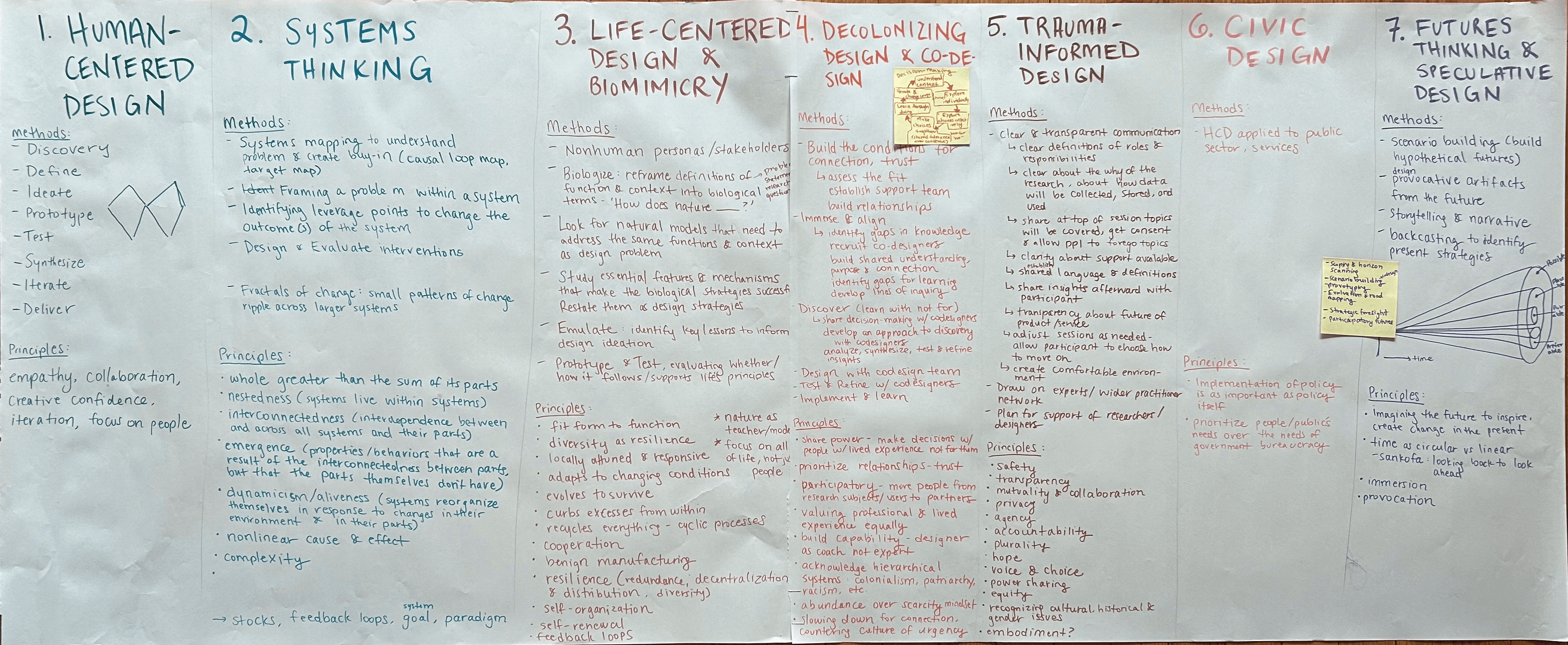
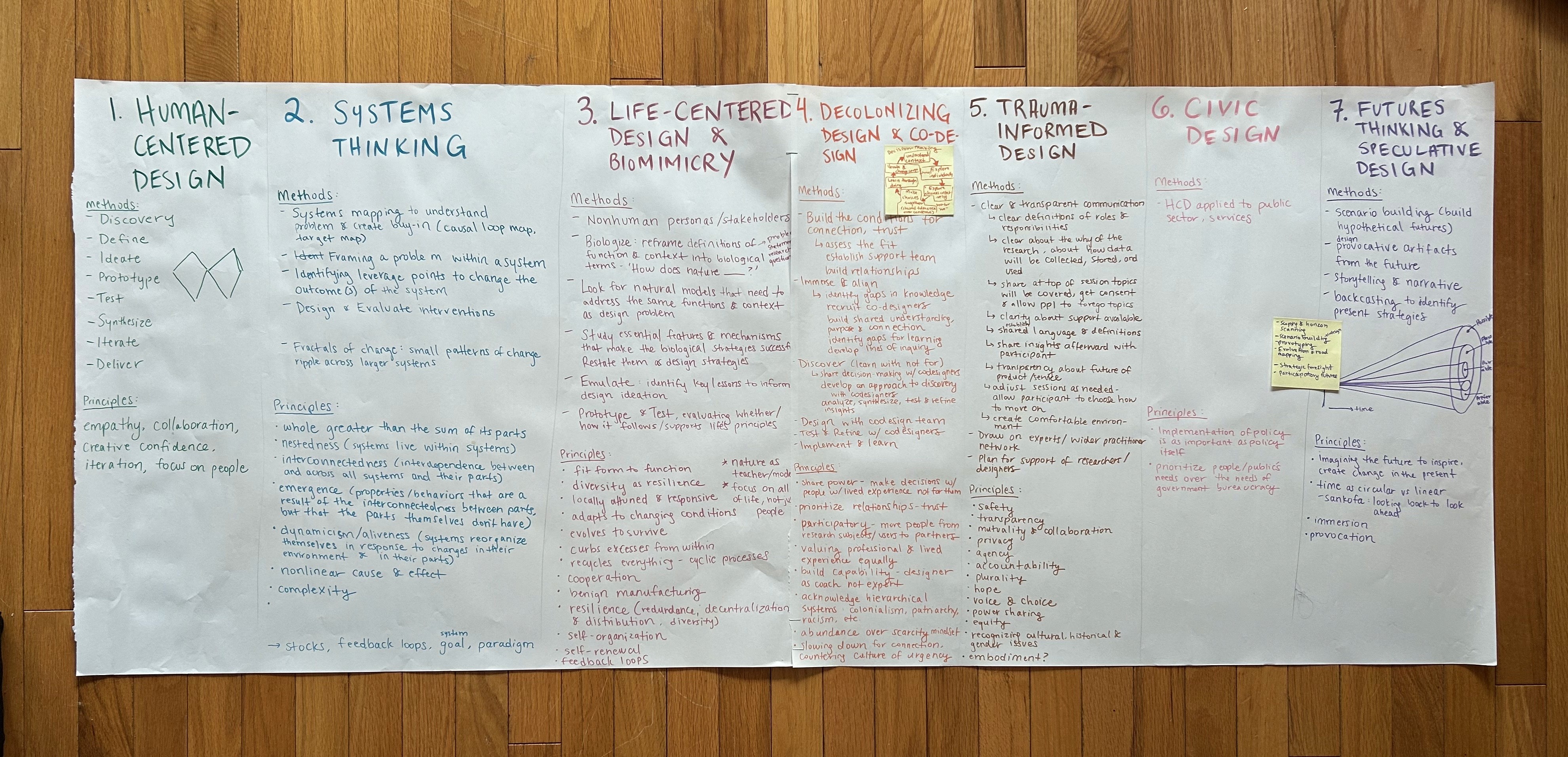
As a final invitation for reflection, I created a synthesized view of the 7 topics that we covered during the Reading Circle.
I encouraged the group (myself included) to use the summary to create their own map of how each framework's methods and principles overlap and diverge. I also prompted our cohort to think about which methods and principles we would like to incorporate into our own design practices, whether individually or in our current professional work.
Created a comparative summary of the 7 topics' methods and principles
As a final invitation for reflection, I created a synthesized view of the 7 topics that we covered during the Reading Circle.
I encouraged the group (myself included) to use the summary to create their own map of how each framework's methods and principles overlap and diverge. I also prompted our cohort to think about which methods and principles we would like to incorporate into our own design practices, whether individually or in our current professional work.
What I learned
What I learned
The Social Design Reading Circle was an extremely rewarding experiment. My goals from the start were to learn with an engaged group of like-minded folks, to find community in Brooklyn, and to structure my learning as well as practice some of its concepts. By and large the Reading Circle succeeded in meeting each of those goals.
My facilitation skills have been refined by this experience. I learned the rhythms of our conversations and got to play with how to prompt reflection and discussion. I was grateful to have been mentored by Mari Nakano throughout this time of hosting because I learned a lot about leaning into emergence, and how to bake in democratized ways of facilitating. Hosting the Reading Circle also gave me a taste of facilitating mini-workshops, particularly in systems mapping and speculative thinking.
I also learned a lot myself. Structuring my own curriculum helped me organize, work through, and supplement the resources I had been collecting. I now feel like I have a solid foundational survey of important design frameworks, methods, and principles that have helped inform how I want to cultivate my own social design practice.
One of the most rewarding outcomes of this, though, is meeting these precious people and having the honor of creating this community that will continue to gather and support each other, even though the Reading Circle is formally finished. Each one of them held this community together with care, and encouraged me to relax into my role as guide. Thank you to Joie Zhang, Felipe Flores, Heer Mehta, Annie Snyder, and Grace Roebuck (and shoutout to Janvi Ghatalia) for making this learning journey so special! And also kudos to Jess McKay who volunteered to facilitate the sister Reading Circle.
What I learned
The Social Design Reading Circle was an extremely rewarding experiment. My goals from the start were to learn with an engaged group of like-minded folks, to find community in Brooklyn, and to structure my learning as well as practice some of its concepts. By and large the Reading Circle succeeded in meeting each of those goals.
My facilitation skills have been refined by this experience. I learned the rhythms of our conversations and got to play with how to prompt reflection and discussion. I was grateful to have been mentored by Mari Nakano throughout this time of hosting because I learned a lot about leaning into emergence, and how to bake in democratized ways of facilitating. Hosting the Reading Circle also gave me a taste of facilitating mini-workshops, particularly in systems mapping and speculative thinking.
I also learned a lot myself. Structuring my own curriculum helped me organize, work through, and supplement the resources I had been collecting. I now feel like I have a solid foundational survey of important design frameworks, methods, and principles that have helped inform how I want to cultivate my own social design practice.
One of the most rewarding outcomes of this, though, is meeting these precious people and having the honor of creating this community that will continue to gather and support each other, even though the Reading Circle is formally finished. Each one of them held this community together with care, and encouraged me to relax into my role as guide. Thank you to Joie Zhang, Felipe Flores, Heer Mehta, Annie Snyder, and Grace Roebuck (and shoutout to Janvi Ghatalia) for making this learning journey so special! And also kudos to Jess McKay who volunteered to facilitate the sister Reading Circle.
© 2025 Kayla’s Portfolio. All Rights Reserved.